A First Gathering After a Move: Making Introductions Feel Less Like a Test
Plan a first gathering after a move with a simple shared activity, a clear invitation, and flexible hosting that helps guests connect without pressure.
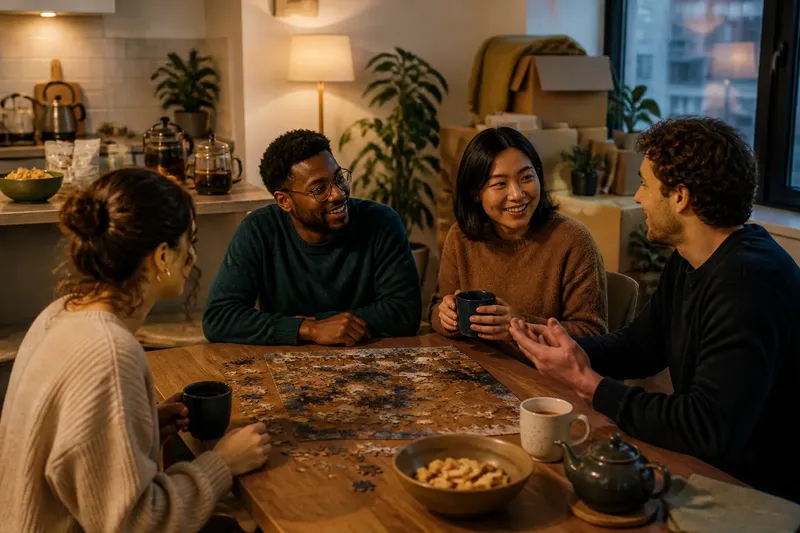
A first gathering after a move is easier to host when a shared activity gives guests something to do besides make conversation. Set out a puzzle, plan a short walk, or offer prepared snacks people can assemble themselves. The aim is a comfortable opening for connection, not a polished performance.
Choose a plan that suits your energy, your guests, and the space you can use now. A small, clear invitation is often enough to help people feel welcome.
Choose by energy
If unpacking has left you tired, invite a few people for tea and packaged snacks. Put a puzzle or simple craft on a table where guests can join in or leave it alone. Give the invitation a start and end time so you are not committing to an open-ended evening.
If you enjoy preparing food, set out ready-to-use ingredients for flatbreads or a snack mix. Do the work that needs attention before guests arrive. If cooking tends to make you feel responsible for everyone’s enjoyment, serve food that is already prepared and choose an activity away from the kitchen.
When you are unsure how much social energy you will have, choose a plan with a natural stopping point: a short walk followed by a drink at home, or a brief board-game session. Tell guests what to expect and when you plan to wrap up.
Plan for guests
For people who already know one another, try a cooperative game, a shared playlist, or a neighborhood walk. Familiar guests can participate without the activity becoming a competition.
For guests who are meeting for the first time, choose something people can do side by side. A puzzle, a drawing table, or an easy walk gives the group a shared focus without asking anyone to tell a personal story or demonstrate a skill.
If one guest may arrive alone, introduce them to another person with a specific connection you know is relevant, such as a nearby café they both enjoy. Then give them room to talk rather than staying between them throughout the visit.
For neighbors you barely know, make the invitation easy to decline. Say that you are having tea and a puzzle and that they are welcome to stop by briefly. This communicates warmth without asking them to disclose anything personal.
Use your home
If boxes are still stacked around the home, make one usable area rather than waiting until everything is unpacked. Clear a surface for snacks and another for the activity. You can mention in the invitation that you are still settling in.
With limited seating, choose an activity that works standing or outdoors, such as assembling snacks or taking a short walk. In a small room, invite only as many people as can move comfortably. Skip a game or food setup that needs more table space than you have.
If you share your home, agree on guests, timing, and common areas with the other resident before inviting anyone. If a pet will be present, mention it when it may affect a guest’s comfort and decide in advance where the pet will be during the gathering.
Match the activity
A useful activity is easy to join, lets conversation pause, and does not require a finished result. Match the setup to the group and the space:
- Small mixed group: Set out a puzzle or simple cooperative game. If guests can join or leave without interrupting everyone, keep it; if not, choose a more flexible activity.
- Guests who like making things: Offer paper, colored pencils, or a forgiving craft. If materials are simple to use and optional, leave them out; if they need a long explanation, choose an easier activity.
- Connection to the neighborhood: Choose a nearby green space, market, or familiar landmark. If the route and meeting point are straightforward, walk together; if not, stay at home or pick an easier destination.
- Food-centered gathering: Prepare ingredients guests can combine themselves. If people can serve themselves without your supervision, use that setup; if it needs constant attention, serve ready-made food instead.
- Low-energy day: Put out tea, fruit, or packaged snacks beside a simple activity. If that feels manageable, keep the plan small; if even that feels like too much, shorten the visit or reschedule.
- Limited table space: Check whether the activity and snacks fit on the available surface. If they do, set them out together; if they do not, serve snacks separately or choose an activity that needs no table.
Elaborate decorations, novelty supplies, and a long menu are not worth the effort unless they genuinely make hosting easier. A clear place for coats, enough cups, and an uncluttered activity area do more to support a relaxed welcome.
Set a warm welcome
Send an invitation that names the activity, who is invited, and how long you expect the gathering to last. Include practical arrival details, such as which entrance to use or where to leave a coat. If you ask guests to bring something, make the request specific and optional.
When someone arrives, show them where to put belongings, offer a drink, and point out the activity. Introduce guests by name and mention a natural shared interest when you know one. Let conversation pause; not every quiet moment needs to be filled.
Say you have moved into an apartment and want to invite two neighbors and a former colleague for an early evening. Your starting supplies are tea, packaged snacks, and a partly finished puzzle, and your invitation sets a clear end time. You put the food on the counter and the puzzle on the table, then introduce the neighbors to your colleague by name and mention a nearby walking route. The expected result is that guests can take a drink, join the puzzle, or talk about the neighborhood without relying on you to carry every conversation.
What should you plan?
What should I host if I know only one guest?
Invite a small group and choose an activity people can do side by side, such as a puzzle or easy walk. Your known guest can join the group naturally, and newcomers have a shared starting point.
How do I invite people without making it awkward?
Send a direct, low-pressure message that names the activity and gives a time window. For example, say you are having tea and working on a puzzle Saturday afternoon and that guests can stay briefly.
What if nobody talks much?
Let the activity make silence comfortable, then offer a simple prompt connected to what is happening, such as asking which puzzle piece someone is looking for. You can also ask a guest to choose a snack or point out something on the walk without putting them on the spot.
Do I need to finish unpacking before I host?
No. Make one area comfortable and tell guests you are still settling in. The rest of the home can remain unfinished.
Check and adjust
Use the final checks to confirm that the gathering is easy to join and manageable for you. Each check connects to a practical hosting choice:
- If there is not enough seating for everyone, choose a standing activity or move the gathering outdoors; if there is enough, keep the planned setup.
- If the activity materials are missing or hard to understand, replace the activity with a puzzle or a simple craft; if they are ready and easy to use, leave them where guests can reach them.
- If the bathroom route is blocked, clear it before guests arrive; if it is open, leave it as is and show guests where to go.
- If snacks or drinks are difficult to reach, move them to a shared surface; if guests can serve themselves, keep them there.
- If fragile or private items would need your attention during the visit, put them away; if they are out of the gathering area, no change is needed.
- If you feel tired before guests arrive, drop the walk or game and keep the visit to drinks and conversation; if you still have energy, follow the original plan.
If someone cancels, continue with whoever remains or offer another time. If the group is comfortable, you can let the visit run longer; if you are ready to stop, say so warmly and clearly. A first gathering after a move works best when the plan is small enough to enjoy and flexible enough to change.